
About Us
Get to know us Welcome to drsaurabhjaiswal.in, your trusted destination for comprehensive mental health care in Lucknow and beyond. Led by Dr. Saurabh Jaiswal,
Get to know us Welcome to drsaurabhjaiswal.in, your trusted destination for comprehensive mental health care in Lucknow and beyond. Led by Dr. Saurabh Jaiswal,
16
October
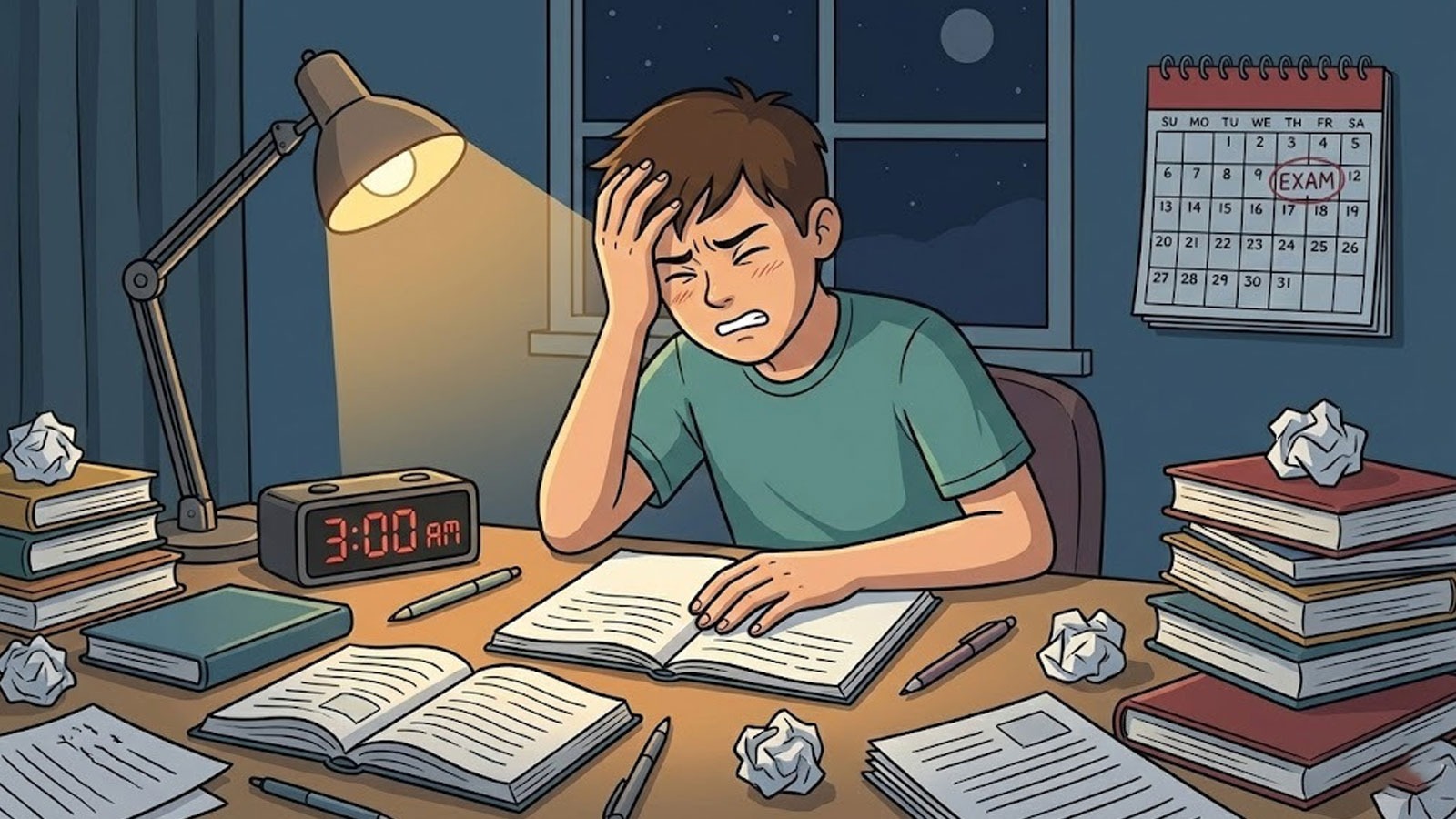
As the exam season approaches, every household in Lucknow with a student preparing for Boards, NEET, or JEE feels the tension. Whether you live in Gomti Nagar or Aliganj, the pressure to perform is undeniable. A certain amount of nervousness is actually healthy—it is your body’s way of saying "this matters" and giving you the energy to focus. However, there is a fine line where helpful pressure turns into a harmful medical condition.
If you are actively searching for a psychiatrist in Lucknow because the worry has become unmanageable, you are not alone. Many students and parents confuse severe anxiety with "just being nervous." Understanding the difference is the first step to getting the right help and ensuring that mental health does not stand in the way of academic success.
As Dr. Saurabh Jaiswal | Psychiatrist in Lucknow emphasizes, “Mental health conditions are highly treatable, especially when addressed early. The sooner we identify the problem, the faster and smoother the recovery process becomes.”
Anxiety and depression are not just “phases” or “mood swings.” They are complex mental health disorders involving chemical, emotional, and behavioral changes in the brain.
It is important to distinguish between "situational stress" and a clinical disorder. Stress is a reaction to a specific demand (the exam). Anxiety is a sustained state of fear that often persists even when there is no immediate threat.
| Feature | Normal Exam Stress | Anxiety Disorder |
|---|---|---|
| Duration | Temporary. It builds up before the exam and disappears the moment you walk out of the exam hall. | Lingering. The worry persists even after exams are over. You panic about results weeks away or fear future exams instantly. |
| Severity | Manageable. You can still function, laugh with friends, and relax during breaks, even if you lose a little sleep. | Paralyzing. It disrupts daily life. It often leads to total insomnia, refusal to eat, or an inability to get out of bed. |
| Focus | Productive. The thought is: "I need to study hard to pass." It motivates action. | Catastrophic. The thought is: "If I don't get 98%, my life is over." Thoughts become irrational and hopeless. |
Parents often tell me they thought their child was just "studious" or "focused," when actually the child was suffering silently. If you notice these red flags, it is not just exam pressure:
Frequent complaints of tension headaches (tight band around the forehead) or migraines.
Nausea, vomiting before school/coaching, or sudden stomach cramps (often mistaken for acidity).
Shaking hands, sweating palms, or feeling dizzy when asked to read or write.
This is the biggest sign. A student who used to be diligent suddenly refuses to go to coaching classes, skips mock tests, or pretends to be sick to avoid school. They aren't lazy; they are avoiding the trigger of their fear.
Complaints that "nothing is going into my head" despite reading the same page for hours.
Snapping at family members, crying without a clear reason, or intense irritability.
One of the most heartbreaking things for a student is Performance Anxiety. You study for months, you know the answers at home, but the moment you see the question paper, your mind goes completely blank.
The Science Behind It: When anxiety levels spike, your brain perceives a threat. It triggers the "Fight or Flight" response, flooding your body with adrenaline. This survival mechanism shuts down the Prefrontal Cortex—the part of the brain responsible for memory recall and complex thinking—so the brain can focus on "surviving." This is a biological reaction, not a sign that the student is unintelligent or unprepared. Punishing a student for this makes it worse; understanding the biology helps us treat it.
Before considering medication, we at Blissful Minds Neuro-Psychiatry Clinic always recommend behavioral techniques to retrain the brain.
1. Grounding Techniques When panic sets in, bring your mind back to the present. Use the 5-4-3-2-1 Technique:
2. The 4-7-8 Breathing Method Deep breathing is a physical brake for anxiety. Inhale through your nose for 4 seconds, hold that breath for 7 seconds, and exhale slowly through your mouth for 8 seconds. Doing this for just two minutes can lower your heart rate significantly.
3. Optimize Your Biology
If the strategies above aren't helping, or if the anxiety is causing panic attacks (sensation of a heart attack, choking feeling), it is time to consult a professional.
As a mental health expert with 15 years experience in student mental health, I want to reassure you that seeking help does not mean you are "weak."
📍 Clinic Address:
Dr. Saurabh Jaiswal | Neuro-Psychiatrist in Lucknow
2/290, Hahnemann Rd, near Sahara (MAX) Hospital,
Virat Khand 2, Gomti Nagar, Lucknow – 226010
📞 Contact: +91 9199187709
🌐 Website: www.drsaurabhjaiswal.com
.png)